
Local News
United States and Australia Sign Rare Earth Minerals Agreement at the White House


Washington: The United States and Australia have reached a landmark agreement on the development and supply of rare earth minerals, a critical step in securing global supply chains for advanced technologies and reducing dependence on China. The agreement was formally signed at the White House by U.S. President Donald Trump and Australian Prime Minister Anthony Albanese.
During the signing ceremony, President Trump emphasized the strategic importance of the deal, describing it as a major milestone in strengthening bilateral cooperation between the two nations. The agreement aims to enhance joint exploration, production, and processing of rare earth elements—essential materials used in electronics, defense systems, and renewable energy technologies.
Speaking to the media following the ceremony, President Trump announced that he had accepted an invitation from Chinese President Xi Jinping to visit China next year, expressing optimism that the visit could pave the way for a fair and balanced trade agreement between Washington and Beijing. “We are hopeful that both sides can reach an understanding that promotes mutual benefit and long-term economic stability,” he said.
Addressing the ongoing Russia-Ukraine conflict, President Trump remarked that it appeared unlikely Ukraine would achieve a military victory, urging both parties to pursue a ceasefire as the most viable path toward peace. “A ceasefire remains the only realistic solution to this crisis,” Trump stated, calling for diplomatic engagement to prevent further human and economic loss.
The rare earth minerals agreement between the United States and Australia is expected to bolster Western efforts to secure reliable sources of critical minerals and reduce strategic vulnerabilities in global supply chains—particularly amid growing geopolitical tensions in the Indo-Pacific region.












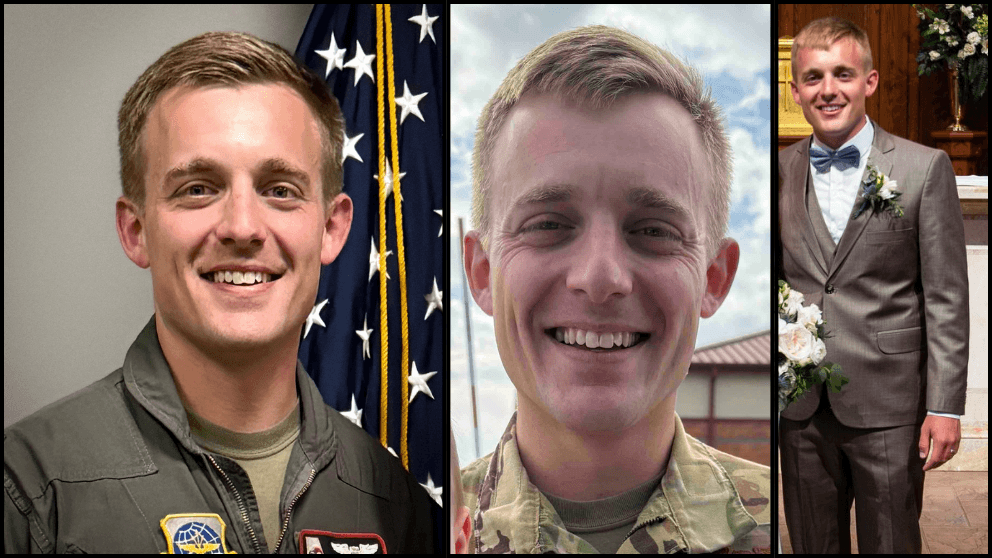
Family members are mourning the loss of U.S. Air Force Maj. Alex Klinner, one of six American service members killed on March 12 when a Boeing KC-135 Stratotanker crashed in Iraq while supporting military operations in the Middle East.
According to relatives, Klinner was a devoted husband and father of three young children.
His wife, Libby Klinner, shared a heartfelt message on social media describing the profound impact of his death on their family.
“On March 12, our world shattered,” she wrote in a post on Instagram. “I’m devastated to lose the best person I know—the person who made everything more fun, my best friend. But even more so, my heart is broken for our three kids who will grow up not knowing him.”
The couple were parents to a two-and-a-half-year-old child and seven-month-old twins. Libby Klinner said her children will grow up without the opportunity to know their father’s humor, compassion, and deep love for his family.
“They won’t see how goofy and funny he was. They won’t witness his selflessness, the way he thought about everyone else before himself,” she wrote. “He was an incredible husband and person, but he was the best dad.”
Maj. Klinner served in the United States Air Force for eight years.
His sister-in-law, Sarah Rose Harrill, described him as a servant leader in a memorial fundraiser created to support the family.
“Alex was more than a serviceman,” Harrill wrote. “He was a devoted husband, a loving father, and the kind of person who would quietly step in to help anyone who needed it. His loss has left an immeasurable void in the lives of all who knew and loved him.”
Just days before the tragedy, Libby Klinner had posted about the challenges of deployment, describing the current assignment as particularly difficult due to global instability.
“This is far from our first deployment, but the uncertain nature of the world makes this one filled with so much more worry and stress,” she wrote. “The kids didn’t ask for this and they certainly don’t understand it. They just know that their world has suddenly turned upside down.”
The family had recently relocated after living in the Birmingham area since 2022.
Libby said they had hoped to remain in Alabama but had recently moved to Oklahoma.
“It still doesn’t feel real,” she wrote. “I keep thinking I’ll get a text saying, ‘Sorry honey! Didn’t mean to scare you,’ and everything will be alright. Because Alex always made everything alright.”
The fatal crash occurred during operations connected to Operation Epic Fury.
According to the United States Department of Defense, the aircraft went down in what officials described as “friendly airspace.”
Pentagon officials said the loss of the aircraft was not the result of hostile fire or friendly fire.
Early information indicates the incident involved two KC-135 aircraft, with one crashing while the other landed safely. Aviation tracking data reportedly showed that aerial refueling missions had departed from Ben Gurion Airport earlier that day, with one aircraft failing to return.
The incident marks the first Air Force fatalities publicly announced in the ongoing regional conflict involving Iran, bringing the total number of U.S. service members killed in the conflict to at least 13.
Mike DeWine confirmed that three of the six service members killed in the crash were assigned to the 121st Air Refueling Wing, part of the Ohio Air National Guard based at Rickenbacker Air National Guard Base.
Among those killed was Technical Sgt. Tyler Simmons, a boom operator and graduate of Eastmoor Academy in Columbus.
Military officials and community leaders described Simmons as a dedicated airman whose work helped sustain operations and protect service members around the world.
“Behind every uniform is a son, a friend, a teammate, and a member of a community who leaves a lasting impact,” officials said in a statement honoring Simmons’ service and sacrifice.
Officials have not yet released the full list of all six service members killed in the crash, and it remains unclear where the remaining victims were from.
The U.S. military continues to investigate the circumstances surrounding the incident.
As families, fellow service members, and communities mourn those lost, tributes continue to pour in honoring the dedication an