
Local News
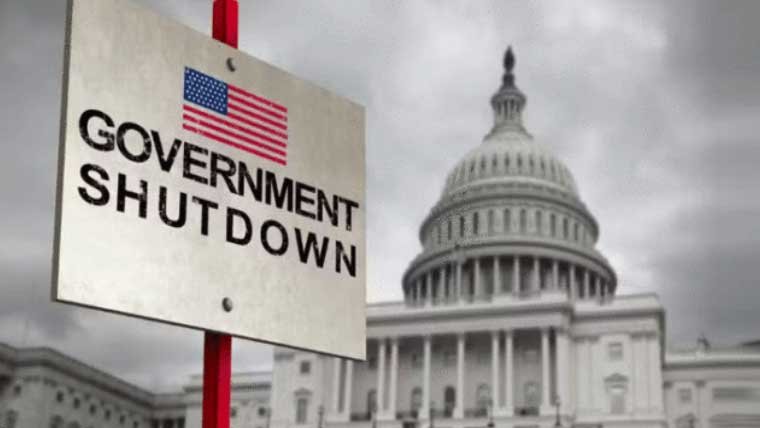
Washington: U.S. Government Shutdown Enters 27th Day Amid Deep Political Deadlock

Washington:
The U.S. government shutdown has stretched into its 27th consecutive day, with no resolution in sight as Republicans and Democrats remain locked in a bitter standoff over the federal budget. The prolonged impasse has left thousands of government employees on forced leave and disrupted key public services across the country.
During the shutdown, President Donald Trump ordered a freeze on federal funds, redirecting available resources to ensure that members of the military and law enforcement agencies continued to receive their salaries. However, this decision has sparked significant controversy, with critics arguing that the move undermines Congress’s constitutional authority over federal spending.
Political analysts warn that the administration’s selective allocation of funds could set a dangerous precedent, blurring the separation of powers between the executive and legislative branches. Democratic lawmakers have accused President Trump of favoring specific departments while neglecting others.
It has been reported that approximately $18 billion in funding earmarked for New York’s transportation projects has been withheld, while environmental “green funds” allocated to 16 states, including California, Washington, and Hawaii, have been canceled. These actions have further heightened tensions between the White House and several state governments.
U.S. Vice President JD Vance cautioned that if the shutdown continues, the government may be forced to lay off additional employees in an effort to maintain essential services. He emphasized the need for both parties to reach a compromise to prevent further economic and administrative disruption.
Democratic Senate Majority Leader Chuck Schumer sharply criticized President Trump, accusing him of “holding the American public hostage” for political leverage. Schumer argued that the administration is using the shutdown as a bargaining tool, while millions of Americans suffer the consequences. He reiterated the Democratic demand for the restoration of healthcare subsidies and the reversal of recent Medicaid cuts.
On the other side of the aisle, Republican Senator John Thune accused Democrats of allowing their opposition to President Trump to cloud their judgment. He urged Democratic leaders to “come to their senses” and work constructively toward reopening the government.
As the shutdown enters its fourth week, pressure continues to mount on both parties to find common ground and restore normal government operations before the political and economic toll deepens further.









Local News
President Trump Halts All Trade Negotiations with Canada Following Reagan-Themed Ad Controversy

Washington:
U.S. President Donald Trump has announced the immediate suspension of all ongoing trade negotiations with Canada, citing what he described as a “false and misleading” advertising campaign that misrepresented his administration’s trade policies.
According to President Trump, the decision came in direct response to a Canadian advertising campaign that used archival footage of former U.S. President Ronald Reagan, in which Reagan appeared to speak against the imposition of tariffs on imported goods. The ad suggested that Trump’s tariff policies were contrary to Reagan’s free trade philosophy.
“Based on their highly reprehensible behavior, all trade negotiations with Canada are being terminated immediately,” President Trump declared in a post on his social media platform, Truth Social.
The advertisement reportedly drew significant attention in Washington. Ontario Premier Doug Ford acknowledged earlier this week that the ad had reached the U.S. President’s desk. “I learned that the President saw our ad, and he probably wasn’t very happy with it,” Ford told reporters on Tuesday. The Reagan-themed commercial included clips of the former president warning that import tariffs lead to inflation, job losses, and trade wars — messages perceived as a direct critique of Trump’s economic stance.
President Trump has consistently defended the use of tariffs as a strategic economic tool to protect American industries and exert leverage in international trade negotiations. His administration’s tariff policies have resulted in the highest U.S. tariff rates since the 1930s, a move that has sparked both domestic and international criticism from business leaders and economists who warn of long-term economic repercussions.
In response to the U.S. decision, Canadian Prime Minister Mark Carney reaffirmed that Ottawa will defend its national economic interests, stating, “If ongoing trade negotiations with the United States fail, Canada will not allow unfair American access to its markets under any circumstances.”
This latest escalation marks a sharp setback in U.S.–Canada economic relations. Earlier this year, President Trump imposed heavy tariffs on Canadian steel, aluminum, and automobile imports, prompting Ottawa to introduce retaliatory measures. Negotiations aimed at reaching a new trade framework for these sectors had been underway for several weeks but now appear to have been frozen indefinitely following the President’s announcement.
The abrupt halt in talks underscores the fragility of cross-border trade diplomacy and raises new concerns about the future of North American economic cooperation.