
Local News
Moscow: Kremlin Denies Reports of Putin–Trump Meeting Cancellation

Moscow :
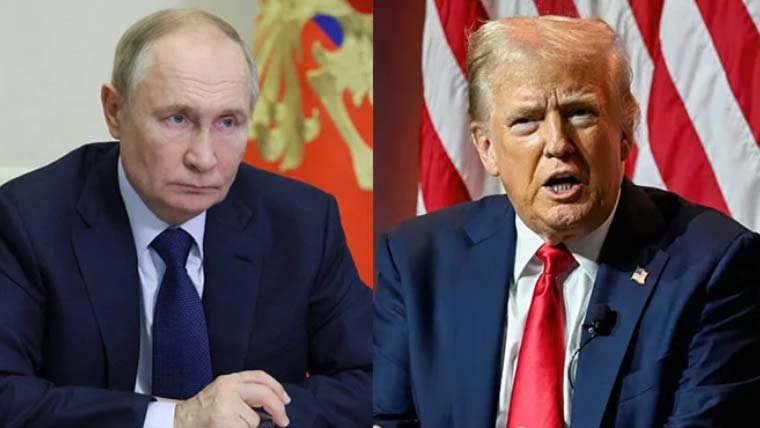
The Russian government has denied reports claiming that the planned meeting between Russian President Vladimir Putin and U.S. President Donald Trump has been canceled, calling such rumors “completely false.”
A spokesperson for the Kremlin clarified that both nations are actively preparing for the high-level meeting. “The Russian and American foreign ministers are coordinating the details and logistics of the summit,” the spokesperson said, emphasizing that the engagement will not be a mere formality.
“President Putin and President Trump do not intend to meet just for symbolic reasons,” the Kremlin official added. “The meeting process is complex and requires careful preparation. Both leaders have instructed their respective teams to ensure that discussions are meaningful and productive.”
The spokesperson further noted that, as per President Putin’s directives, negotiations will be conducted with Russia’s national interests as the top priority. He reaffirmed that, despite ongoing tensions and disagreements between Moscow and Washington, dialogue remains essential.
“Even with existing challenges in Russia–U.S. relations, our position is clear — communication must continue,” the spokesperson concluded. “Constructive engagement is the only path forward for addressing global and bilateral issues.”






Local News
President Trump Halts All Trade Negotiations with Canada Following Reagan-Themed Ad Controversy
Washington:
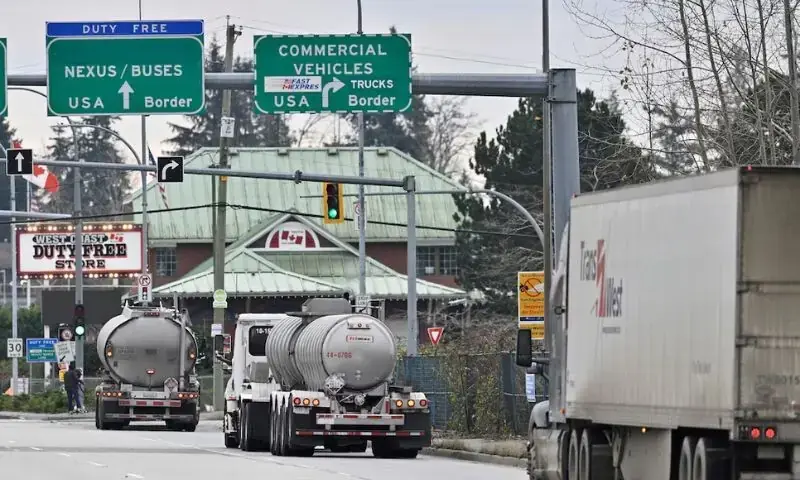
U.S. President Donald Trump has announced the immediate suspension of all ongoing trade negotiations with Canada, citing what he described as a “false and misleading” advertising campaign that misrepresented his administration’s trade policies.
According to President Trump, the decision came in direct response to a Canadian advertising campaign that used archival footage of former U.S. President Ronald Reagan, in which Reagan appeared to speak against the imposition of tariffs on imported goods. The ad suggested that Trump’s tariff policies were contrary to Reagan’s free trade philosophy.
“Based on their highly reprehensible behavior, all trade negotiations with Canada are being terminated immediately,” President Trump declared in a post on his social media platform, Truth Social.
The advertisement reportedly drew significant attention in Washington. Ontario Premier Doug Ford acknowledged earlier this week that the ad had reached the U.S. President’s desk. “I learned that the President saw our ad, and he probably wasn’t very happy with it,” Ford told reporters on Tuesday. The Reagan-themed commercial included clips of the former president warning that import tariffs lead to inflation, job losses, and trade wars — messages perceived as a direct critique of Trump’s economic stance.
President Trump has consistently defended the use of tariffs as a strategic economic tool to protect American industries and exert leverage in international trade negotiations. His administration’s tariff policies have resulted in the highest U.S. tariff rates since the 1930s, a move that has sparked both domestic and international criticism from business leaders and economists who warn of long-term economic repercussions.
In response to the U.S. decision, Canadian Prime Minister Mark Carney reaffirmed that Ottawa will defend its national economic interests, stating, “If ongoing trade negotiations with the United States fail, Canada will not allow unfair American access to its markets under any circumstances.”
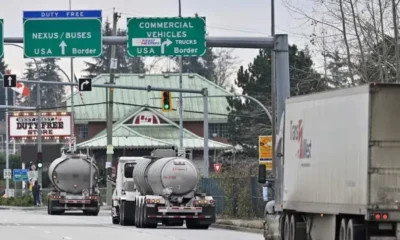
This latest escalation marks a sharp setback in U.S.–Canada economic relations. Earlier this year, President Trump imposed heavy tariffs on Canadian steel, aluminum, and automobile imports, prompting Ottawa to introduce retaliatory measures. Negotiations aimed at reaching a new trade framework for these sectors had been underway for several weeks but now appear to have been frozen indefinitely following the President’s announcement.
The abrupt halt in talks underscores the fragility of cross-border trade diplomacy and raises new concerns about the future of North American economic cooperation.