
Local News
Former President Trump Rules Out Running as Vice President in 2028 Elections

Washington:
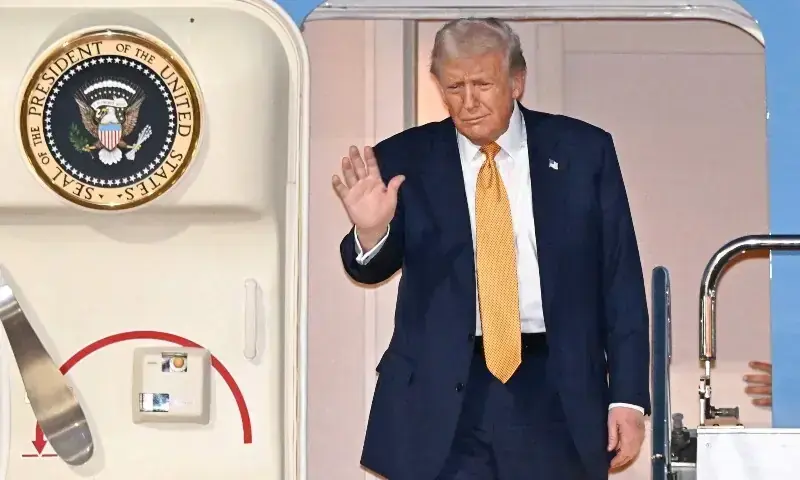
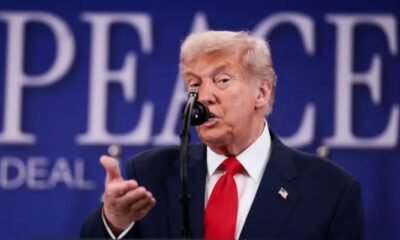
Former U.S. President Donald Trump has firmly dismissed speculation that he might seek the vice presidency in the 2028 U.S. elections, clarifying that he has no intention of pursuing such a role despite suggestions from some of his supporters.
The idea, which had gained traction among a segment of Trump’s base, proposed that running as vice president could potentially pave the way for Trump to return to the presidency for an additional term.
Speaking to reporters aboard Air Force One, Trump addressed the speculation directly. According to Reuters, he said, “I would be allowed to do it, but I wouldn’t do it. I think it would be a trick, and the public wouldn’t like it. It wouldn’t be the right way.”
His remarks follow a series of recent public appearances where Trump hinted at his continued political ambitions. Reports have also noted that caps emblazoned with the slogan ‘Trump 2028’ were spotted at the White House, further fueling speculation about his future plans.
Under the 22nd Amendment to the U.S. Constitution, however, no individual may be elected president more than twice. Some political observers have theorized that if Trump were elected vice president and the sitting president later resigned, he could technically reassume the presidency. Nonetheless, legal experts have widely dismissed this scenario, arguing that such a path would be unconstitutional.
Commenting further, Trump remarked, “I would love to do that — I have the best numbers ever,” but maintained that the move would not be appropriate. When asked by a reporter whether he was completely ruling out a third term, Trump gave a characteristically ambiguous response: “Am I ruling it out? I mean, you have to tell me that.”
In a separate comment, Trump praised Vice President J.D. Vance and Secretary of State Marco Rubio, describing both as “great people,” and added that if they ever formed a political team, “they would be unbeatable.”
Trump’s latest comments reaffirm his ongoing influence in U.S. politics while quelling rumors of a potential vice-presidential bid — a move that, according to constitutional scholars, remains legally out of reach.






Local News
President Trump Halts All Trade Negotiations with Canada Following Reagan-Themed Ad Controversy
Washington:
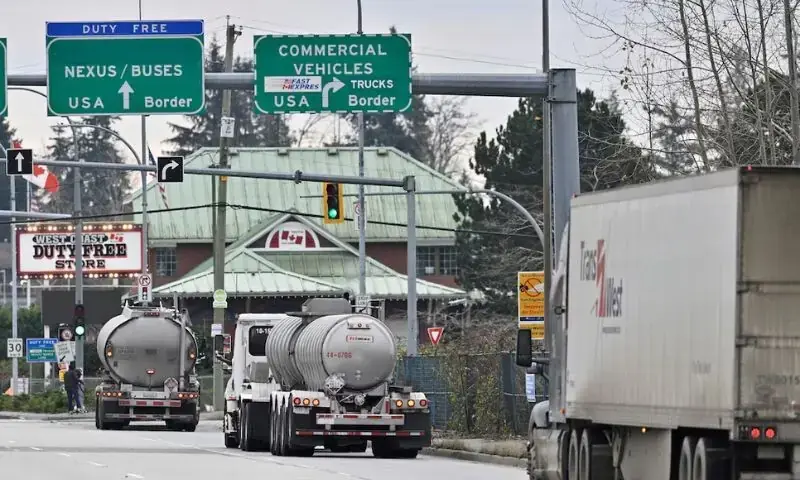
U.S. President Donald Trump has announced the immediate suspension of all ongoing trade negotiations with Canada, citing what he described as a “false and misleading” advertising campaign that misrepresented his administration’s trade policies.
According to President Trump, the decision came in direct response to a Canadian advertising campaign that used archival footage of former U.S. President Ronald Reagan, in which Reagan appeared to speak against the imposition of tariffs on imported goods. The ad suggested that Trump’s tariff policies were contrary to Reagan’s free trade philosophy.
“Based on their highly reprehensible behavior, all trade negotiations with Canada are being terminated immediately,” President Trump declared in a post on his social media platform, Truth Social.
The advertisement reportedly drew significant attention in Washington. Ontario Premier Doug Ford acknowledged earlier this week that the ad had reached the U.S. President’s desk. “I learned that the President saw our ad, and he probably wasn’t very happy with it,” Ford told reporters on Tuesday. The Reagan-themed commercial included clips of the former president warning that import tariffs lead to inflation, job losses, and trade wars — messages perceived as a direct critique of Trump’s economic stance.
President Trump has consistently defended the use of tariffs as a strategic economic tool to protect American industries and exert leverage in international trade negotiations. His administration’s tariff policies have resulted in the highest U.S. tariff rates since the 1930s, a move that has sparked both domestic and international criticism from business leaders and economists who warn of long-term economic repercussions.
In response to the U.S. decision, Canadian Prime Minister Mark Carney reaffirmed that Ottawa will defend its national economic interests, stating, “If ongoing trade negotiations with the United States fail, Canada will not allow unfair American access to its markets under any circumstances.”
This latest escalation marks a sharp setback in U.S.–Canada economic relations. Earlier this year, President Trump imposed heavy tariffs on Canadian steel, aluminum, and automobile imports, prompting Ottawa to introduce retaliatory measures. Negotiations aimed at reaching a new trade framework for these sectors had been underway for several weeks but now appear to have been frozen indefinitely following the President’s announcement.
The abrupt halt in talks underscores the fragility of cross-border trade diplomacy and raises new concerns about the future of North American economic cooperation.