
Local News
Framework for TikTok Deal Reached Between the U.S. and China; Final Agreement to Be Signed in South Korea


Washington: The United States and China have reportedly reached a framework agreement regarding the future of TikTok, paving the way for the resolution of one of the most contentious issues between the two countries. The final accord is expected to be signed in South Korea, where U.S. President Donald Trump and Chinese President Xi Jinping are scheduled to meet next week.
U.S. Treasury Secretary Scott Besant confirmed that all major issues related to TikTok’s operations and ownership have been settled between the two sides. He added that the agreement represents significant progress toward broader economic cooperation between the world’s two largest economies.
Besant emphasized that the framework lays the foundation for a potential trade deal, noting that China has expressed readiness to move forward with a comprehensive trade agreement with the United States. Discussions are also expected to include the 100 percent tariff currently imposed on certain Chinese goods, with the final decision to be made jointly by Presidents Trump and Xi.
The Treasury Secretary further revealed that China has postponed the implementation of its new system for rare earth export licenses, signaling a willingness to ease trade tensions. He also expressed optimism that China will resume large-scale purchases of American soybeans, a move that would bring relief to U.S. agricultural producers. “When a trade agreement is reached, American soybean farmers will be among the biggest beneficiaries,” Besant said, assuring that no new tariffs will be introduced against China during the ongoing negotiations.
Meanwhile, China’s Vice Premier called for the joint implementation of the agreed roadmap, stressing that dialogue and consultation remain the most effective means to resolve differences. He underscored the importance of mutual respect and cooperation, urging both countries to continue working toward a balanced and sustainable partnership that addresses each side’s core concerns.


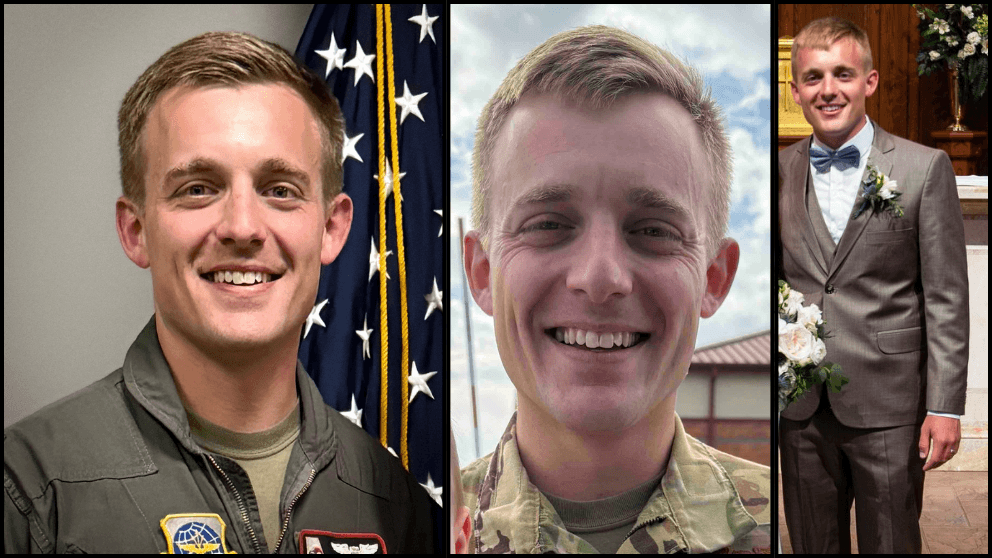
Family members are mourning the loss of U.S. Air Force Maj. Alex Klinner, one of six American service members killed on March 12 when a Boeing KC-135 Stratotanker crashed in Iraq while supporting military operations in the Middle East.
According to relatives, Klinner was a devoted husband and father of three young children.
His wife, Libby Klinner, shared a heartfelt message on social media describing the profound impact of his death on their family.
“On March 12, our world shattered,” she wrote in a post on Instagram. “I’m devastated to lose the best person I know—the person who made everything more fun, my best friend. But even more so, my heart is broken for our three kids who will grow up not knowing him.”
The couple were parents to a two-and-a-half-year-old child and seven-month-old twins. Libby Klinner said her children will grow up without the opportunity to know their father’s humor, compassion, and deep love for his family.
“They won’t see how goofy and funny he was. They won’t witness his selflessness, the way he thought about everyone else before himself,” she wrote. “He was an incredible husband and person, but he was the best dad.”
Maj. Klinner served in the United States Air Force for eight years.
His sister-in-law, Sarah Rose Harrill, described him as a servant leader in a memorial fundraiser created to support the family.
“Alex was more than a serviceman,” Harrill wrote. “He was a devoted husband, a loving father, and the kind of person who would quietly step in to help anyone who needed it. His loss has left an immeasurable void in the lives of all who knew and loved him.”
Just days before the tragedy, Libby Klinner had posted about the challenges of deployment, describing the current assignment as particularly difficult due to global instability.
“This is far from our first deployment, but the uncertain nature of the world makes this one filled with so much more worry and stress,” she wrote. “The kids didn’t ask for this and they certainly don’t understand it. They just know that their world has suddenly turned upside down.”
The family had recently relocated after living in the Birmingham area since 2022.
Libby said they had hoped to remain in Alabama but had recently moved to Oklahoma.
“It still doesn’t feel real,” she wrote. “I keep thinking I’ll get a text saying, ‘Sorry honey! Didn’t mean to scare you,’ and everything will be alright. Because Alex always made everything alright.”
The fatal crash occurred during operations connected to Operation Epic Fury.
According to the United States Department of Defense, the aircraft went down in what officials described as “friendly airspace.”
Pentagon officials said the loss of the aircraft was not the result of hostile fire or friendly fire.
Early information indicates the incident involved two KC-135 aircraft, with one crashing while the other landed safely. Aviation tracking data reportedly showed that aerial refueling missions had departed from Ben Gurion Airport earlier that day, with one aircraft failing to return.
The incident marks the first Air Force fatalities publicly announced in the ongoing regional conflict involving Iran, bringing the total number of U.S. service members killed in the conflict to at least 13.
Mike DeWine confirmed that three of the six service members killed in the crash were assigned to the 121st Air Refueling Wing, part of the Ohio Air National Guard based at Rickenbacker Air National Guard Base.
Among those killed was Technical Sgt. Tyler Simmons, a boom operator and graduate of Eastmoor Academy in Columbus.
Military officials and community leaders described Simmons as a dedicated airman whose work helped sustain operations and protect service members around the world.
“Behind every uniform is a son, a friend, a teammate, and a member of a community who leaves a lasting impact,” officials said in a statement honoring Simmons’ service and sacrifice.
Officials have not yet released the full list of all six service members killed in the crash, and it remains unclear where the remaining victims were from.
The U.S. military continues to investigate the circumstances surrounding the incident.
As families, fellow service members, and communities mourn those lost, tributes continue to pour in honoring the dedication an